Field NotesOp-ed5 min read
Pay your AI vendors for results, not hours
AI makes work faster, but hourly contracts keep the savings with the vendor. Here is how to buy AI work by the result instead.

Adam Blazer
Fractional Chief Intelligence Officer

Wall Street banks and private equity firms expect AI to shrink their legal bills. In the first half of 2026, demand for big-law hours rose 4.2%, against a normal pace of about 1.5%, according to Citi’s law firm banking group as reported by Bloomberg Law’s Roy Strom on September 3.
The firms use AI. In the same Citi data, two-thirds of firms say their associates use it daily. The hours went up anyway.
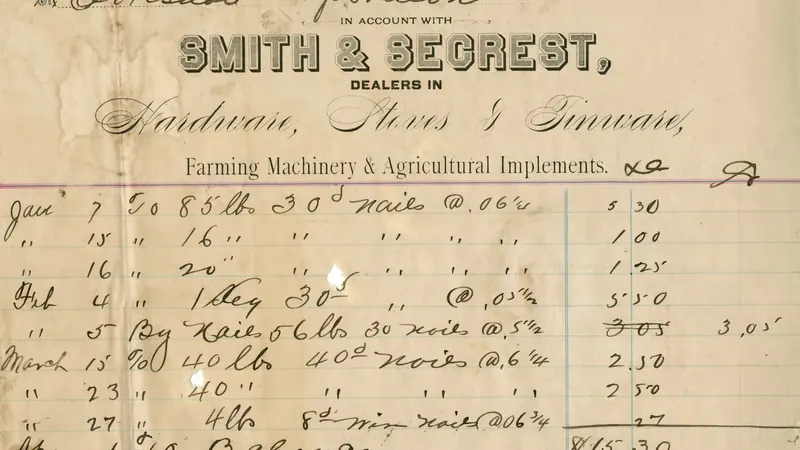
I don’t think the law firms are doing anything sinister. They are doing what an hourly contract tells them to do. When you pay for time, every hour AI saves belongs to whoever sells the hours. That applies to your AI consultants, your agencies and your implementation partners, not only to lawyers.
rise in demand for big-law hours in the first half of 2026, while clients expected AI to cut bills
Hourly billing hands the AI savings to the vendor
Picture the incentives from the vendor’s side. Say a firm bills you for a research memo that used to take eight hours, and an associate with a good AI tool can now do it in three. The firm can bill three hours and lose five hours of revenue, or it can find more work to fill the time. I’d bet most will find more work. Strom’s column points out that rising billable hours do not square with the claim that AI is saving time, and he suggests firms either show the hours falling or say plainly that AI lets them do more.
The same Citi survey of 57 firms found three-quarters expect AI to affect the billable hour model by 2028, and about half say it already has. Citi’s Gretta Rusanow told Strom that moving off the billable hour is one of the biggest opportunities for large firms. The firms see the change coming. The question is whether you wait for them to offer it or ask for it now.
If you run a company doing $5M to $50M a year, your version of this is smaller and more common. It is the agency that bills you monthly retainers for content its team now drafts with AI. It is the consultant who charges by the day to set up a chatbot. It is the developer who quotes hours for work an agent can draft in an afternoon. None of them are lying to you. The contract simply never asked them to share the gain.
Software vendors already priced by the result
The software side moved first, which tells you results pricing is workable.
In April, HubSpot changed how it charges for two of its AI agents. Its Customer Agent went from $1.00 per conversation to $0.50 per resolved conversation, and its Prospecting Agent moved to $1 per qualified lead handed to your team, as MarTech reported on April 2. HubSpot’s chief customer officer Jon Dick put it plainly: “You pay when it works, full stop.”
Salesforce has been heading the same way. Its Agentforce pricing now lists conversations at $2 each and Flex Credits at $500 per 100,000, alongside per-user licenses, according to Let’s Data Science on August 31. That is a hybrid, not a full switch, but the direction is clear.
Look at what the per-resolution price does to the vendor. Under the old HubSpot terms, a conversation the agent fumbled still earned a dollar. Under the new terms, it earns nothing. The vendor now makes more money only when the agent resolves more of your customers’ questions, which is the exact thing you bought it for. Its product team, its support team and its account manager all start caring about your resolution rate. You get that alignment for free just by changing what the invoice counts.
When a vendor can count the thing you care about, it can charge for that thing. A resolved ticket. A qualified lead. A reconciled invoice. A landing page that went live. Services firms can do this too. Most just haven’t been asked.
Paying for hours
- Vendor keeps the time AI saves
- You pay for effort and rework
- Nobody owns the outcome number
Paying for results
- You share in the time AI saves
- Pay per resolved ticket or lead
- Both sides track one number
How to write a results contract
This is how I would structure it with any AI vendor, whether it sells software or services.
Name the unit of result. Pick one thing you can count in your own systems. “A support ticket closed without a person touching it and not reopened within seven days” is a unit. “Improved customer experience” is not.
Measure the baseline before anyone starts. Count how many of those units your team produces today and what each one costs in staff time. Without a baseline, the vendor’s dashboard becomes the only scoreboard, and it will always look good.
Pay a small fixed fee for setup, then pay per result. Setup is real work. Pay for it once. After that, the vendor earns money when the result happens. If they won’t price per result, ask for a guarantee instead: a stated number of hours saved or units delivered within 30 or 60 days, or a refund.
Say what does not count. Reopened tickets, leads your sales team rejects and pages that had to be rebuilt should earn nothing. Write these exclusions into the contract before launch, when nobody has a stake in the number yet.
Count from your systems. The result should be visible in your help desk, your CRM or your accounting software. If only the vendor can see it, you are back to trusting the timesheet.
Put a cap on spend. Results pricing can surprise you if volume spikes. A monthly ceiling keeps the bill predictable while the vendor still gets paid for what it delivers.
Where hourly billing still makes sense
Some work does not have a countable result yet. Early discovery, where nobody knows which workflow to automate, is one. Strategy work where the output is a decision is another. I am fine paying for time there, as long as the engagement is short and ends with a written recommendation you can act on.
What I would not do is let discovery terms carry over into delivery. Once you know the workflow, the task and the measure, the contract should change. Vendors who trust their own AI work will take that deal. Pay attention to the ones who won’t.
There is one more benefit. A results contract forces you to define what you want before you buy. AI projects drift when nobody has written down the result. The contract makes you do it on day one.
What to do this week
- List vendors billing by time
- Name one countable result each
- Pull a baseline from your data
- Ask for per-result pricing
- Write exclusions into the deal
- Pull your last three months of invoices and mark every vendor that bills by hour, day or retainer for work AI could speed up.
- For each one, write a single sentence naming the result you want and where you would count it.
- Count that result for the last 90 days so you have a baseline.
- Send each vendor the sentence and the baseline, and ask what they would charge per result or what they would guarantee.
- Renew on those terms or start looking. Give it one quarter, then compare what you paid against what you got.
Sources
- Big Law AI Cost Savings Remain a Mystery as Billable Hours Jump (Bloomberg Law, September 3, 2026)
- HubSpot moves to outcome-based pricing for some Breeze AI agents (MarTech, April 2, 2026)
- Salesforce Expands Consumption Pricing for Agentforce (Let’s Data Science, August 31, 2026)